
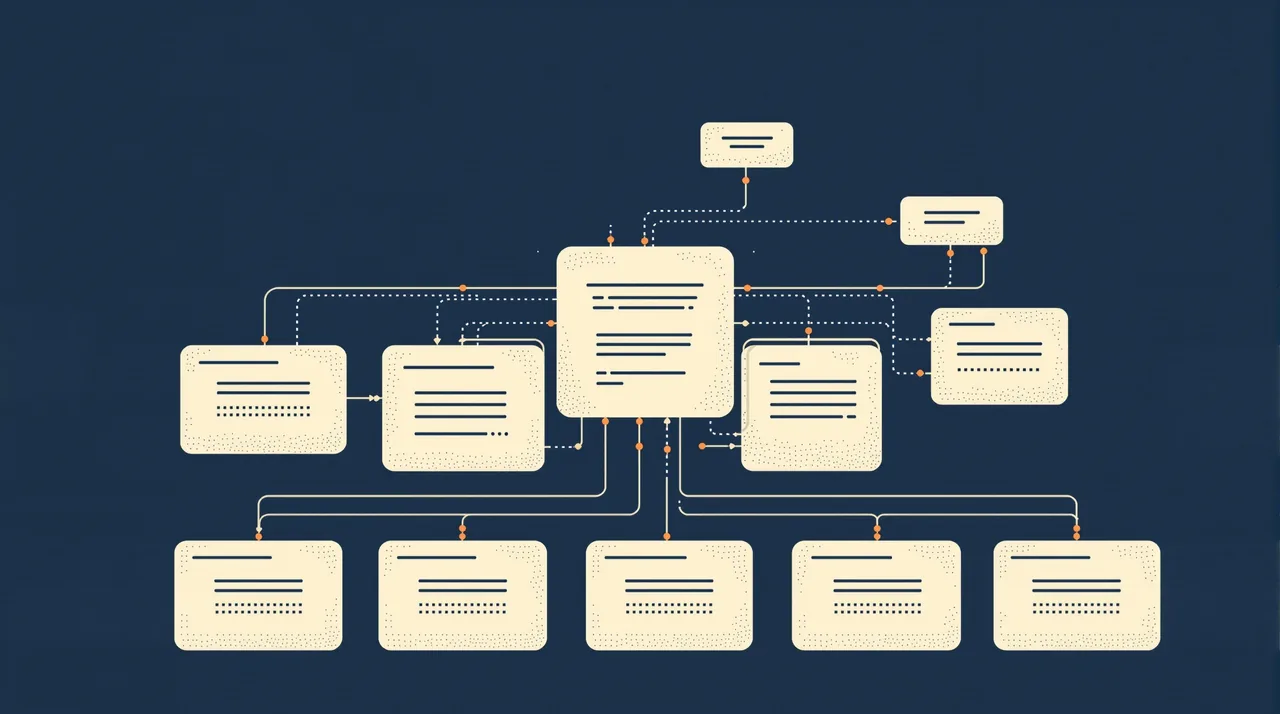
Custom web development means building a website with code written specifically for that site, rather than assembling it from templates or page-builder blocks. The site is custom-coded in HTML, CSS, JavaScript, and (usually) a backend framework like Next.js, Astro, WordPress with a custom theme, or a fully bespoke stack. The output is a site that looks and behaves exactly the way the brief specified, rather than fitting a template that nearly does.
Key takeaway: Custom web development means code written specifically for your site, costing roughly 8,000 to 250,000 USD in 2026, and it is worth it only when a template genuinely cannot do the job.
I run Seahawk Media. We have shipped over 12,000 sites since 2018, ranging from heavily-templated WordPress builds to fully custom-coded Next.js applications. This is the operator view of what custom web development actually means in 2026, what it costs, and when it is the right call.
What custom web development actually means
There is a spectrum from fully templated to fully custom. Most sites sit somewhere in the middle. The four points on the spectrum:
Fully templated
A theme from a marketplace (ThemeForest, Wix templates, Squarespace themes) installed unchanged. Cost: 50 to 500 USD. Speed: hours to a day. Right for hobby projects, MVPs, anything where the site is not the brand.
Templated with customisation
A starter theme or page builder (Elementor, Bricks, Webflow templates) customised with brand colours, content, and layout tweaks. Cost: 1,000 to 5,000 USD. Speed: 1 to 4 weeks. Right for small businesses, indie founders, marketing sites without strong design language.
Custom theme on a framework
A WordPress theme, Astro template, or Next.js project built from scratch for the brand. Custom HTML and CSS, custom content models, but using a known framework as the engine. Cost: 8,000 to 40,000 USD. Speed: 4 to 10 weeks. This is the most common form of "custom web development" in 2026.
Fully bespoke build
Custom-coded from the framework upward. Often headless architecture, custom design system, custom components, custom integrations. Cost: 25,000 to 150,000 USD or more. Speed: 8 to 20 weeks. Right for brand-led businesses, product surfaces, anything where the website is the company.
What the work actually involves
A typical custom web development engagement has six phases:
Discovery (1 to 2 weeks). The agency learns your business, audience, brand, and constraints. Output: a written project plan and a confirmed scope.
Design (2 to 4 weeks). Wireframes, then full visual design in Figma. Output: a complete design system covering every page type and key component.
Build (3 to 8 weeks). Engineering converts design into working code. Includes content modelling, CMS setup, integrations, and on-going design QA.
QA (1 to 2 weeks). Cross-browser testing, accessibility audit, performance audit, content review, broken-link check. Bugs surfaced and fixed.
Launch (a few days). Migration if applicable, DNS cutover, monitoring set up. The riskiest phase, often underestimated.
Post-launch (ongoing). Issue triage in the first month, plus the long maintenance tail. Most custom sites need 5 to 30K USD per year of post-launch care to stay healthy.
What it costs in 2026
Realistic cost ranges based on engagements I have observed at Seahawk Media and across the boutique-studio segment in 2026:
Brochure site, 5 to 10 pages, custom design but standard CMS: 8K to 25K USD.
Marketing site, 10 to 30 pages, custom design, custom content models, integrations: 15K to 50K USD.
Multi-product site or directory at scale: 30K to 90K USD.
Headless WordPress with custom Next.js or Astro frontend: 25K to 90K USD.
Bespoke product surface or web application: 60K to 250K USD or more.
Annual maintenance: 5K to 30K USD typical, scaling with site complexity.
Below 8K USD for a custom build, you are buying a templated build with custom labels. Above 250K USD for a marketing site, you are paying for an enterprise agency overhead that may not be earning its cost.
When custom is worth it
Custom web development pays in three scenarios. Each has clear symptoms.
The website is the brand
Design-led businesses, premium products, agencies whose value depends on visible craft. The website is the showroom; the website doing the brand justice is the entire reason for the engagement.
The product or content model is unusual
Standard templates do not handle multi-tenant directories, complex search, intricate filtering, custom commerce flows, or membership platforms with bespoke logic. Custom dev is not a luxury here; it is the only way to ship the product.
Performance is part of the brief
Sites where Lighthouse 100 is the floor, or Core Web Vitals affect ad cost, or the brand demands page-loads under one second. Templated approaches cannot reliably hit those targets. Custom builds can.
When custom is not worth it
Three scenarios where custom is the wrong answer and a templated approach wins on total cost of ownership:
Brochure site under 5K USD budget
At this budget, custom is a false economy. Webflow, Framer, or Squarespace will get you a polished site in days, with the design tooling and hosting bundled.
Pre-product-market-fit
Your positioning will change. A custom site at this stage locks in design decisions that are about to be invalidated. Use a templated approach until the brand is stable.
No post-launch maintenance plan
Custom sites need active care. If nobody will maintain it, the templated approach absorbs more of the maintenance burden into the platform fee. Webflow and Framer in particular do this well.
Custom web development versus alternatives
A short comparison of the four real options:
Custom web development: highest visual control, highest performance ceiling, highest engineering cost, highest maintenance commitment.
Webflow / Framer: high visual control, moderate performance, low engineering cost, moderate maintenance (vendor-managed).
WordPress with templated theme: moderate visual control, moderate performance, low engineering cost, high maintenance (you own it).
Pure marketplace template (Wix, Squarespace): low visual control, moderate performance, near-zero engineering cost, near-zero maintenance.
Pick based on which trade-offs are acceptable for your three-year horizon.
How to evaluate a custom web development agency
Five questions to ask any agency on the first call:
1. Walk me through a recent project similar to mine. What was the brief, what shipped, what came in over budget, what would you do differently.
2. Who specifically would work on my project, and what is their senior-level capacity right now.
3. What is your post-launch maintenance offer. What does it cost. What is included.
4. Why this stack for my project specifically.
5. What is your typical turnaround on a project of my scope.
Agencies that answer all five concretely on a first call are worth shortlisting. Agencies that dodge or generalise should be cut.
Bottom line
Custom web development is the right call when the website is the brand, when the content model is unusual, or when performance is a hard requirement. It is the wrong call for brochure sites under 5K USD, pre-PMF startups, or any project where post-launch maintenance is not staffed.
Pick the right agency by running the four-question framework on yourself first, briefing three or four agencies in the right tier, and scoring on team fit, senior bandwidth, process maturity, stack appropriateness, and portfolio relevance.
At Seahawk Media we ship custom web development for clients across WordPress, Next.js, Astro, and headless architectures. The discovery call is free and the recommendation is honest. We will sometimes tell you Webflow is the right answer.
Frequently asked questions
What is custom web development?
Custom web development means building a website with code written specifically for it, rather than assembling a template or page builder. You get a site shaped to your exact business logic, performance budget, and integrations, with no theme bloat. The trade-off is a higher upfront cost and needing a developer to make changes.
How much does custom web development cost?
In 2026 it runs roughly 8,000 to 250,000 USD depending on scope. A custom marketing site sits at the lower end; a web application with accounts, dashboards, and integrations sits at the upper end. Complexity and integrations drive the figure far more than the agency you pick.
Custom development vs a template, which is better?
Templates and builders win on speed and cost for standard brochure sites. Custom development wins when you need specific functionality, top performance, unusual design, or integrations a template cannot handle. Most small businesses are fine on a builder; custom pays off when the site is core to the business.
How long does custom web development take?
A custom marketing site typically takes 4 to 10 weeks; a custom web application takes 3 to 6 months or more. The timeline is driven by the number of unique templates, integrations, and review cycles. Ask for a phased plan so you see value before the full build lands.