Restaurant web design that gets the booking, and shows up on the Google Maps result that wins it
Restaurant searches happen on mobile, with hunger intent, in the 30 minutes before someone sits down. The site that loads, shows the right menu, and lets them book in three taps is the site that wins.
BOOK YOUR 30-MIN CALL
Who I build for in restaurants
Restaurant marketing is local search plus mobile speed plus the booking integration. Lose any of the three and the customer goes to the next result on Google Maps. The version that wins prioritises the menu and the booking over the design portfolio.
The restaurants clients I take on tend to fit one of these three shapes:
- Independent restaurants in central London, regional cities, or competitive food destinations
- Restaurant groups with 3-15 sites needing per-location pages plus a coherent brand layer
- Specialty venues (private dining, supper clubs, pop-ups) with seasonal menus and event-driven traffic
What Restaurants businesses get wrong about their websites
Mobile-first is non-negotiable
70%+ of restaurant searches are on mobile. The desktop site is the secondary experience. The menu has to load on a 4G phone in under 2 seconds; the booking has to work in three taps. Most restaurant sites fail one or both of those.
OpenTable, Resy, SevenRooms integration
If the restaurant uses a booking platform, and most credible ones do, the integration is the conversion engine. Either embed the booking widget without breaking the rest of the page (most do this badly), or deep-link to the booking platform with proper UTM tracking.
Menu architecture
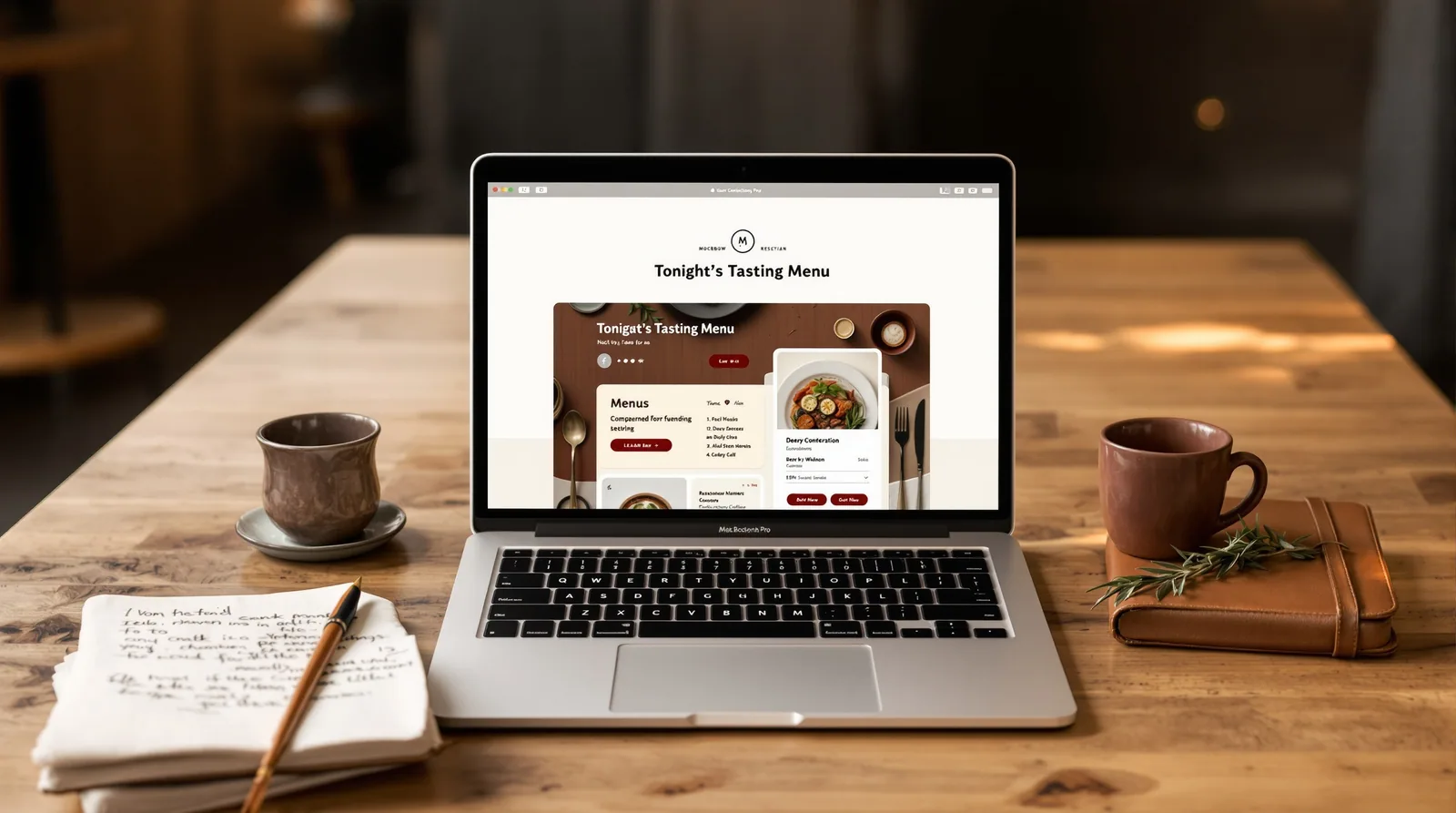
PDF menus are a search-engine and accessibility disaster. Real HTML menus with proper schema markup (`Menu`, `MenuSection`, `MenuItem`) feed the rich result, work on assistive tech, and load in milliseconds. Most restaurant sites are still on PDF in 2026.
What you actually get with the modern-stack approach
One senior team, no junior handoff
I am the senior on every engagement. Twelve thousand sites of practice across twelve years at Seahawk Media. The kickoff conversation is with me; the build is delivered with senior engineers; the handover at the end is real code with documentation, not an agency-locked WordPress install.
Modern stack first, Next.js, Astro, Supabase, headless WordPress
Most agencies in the restaurants space ship 30-plugin WordPress builds because that is what they know. I ship Next.js, Astro, and headless WordPress for the public site, with WordPress as the editorial back end only when the team is genuinely trained on wp-admin. The result: faster pages, smaller attack surface, lower hosting costs, longer-lasting site.
SEO transport that does not lose rankings
If you are migrating from an existing site, the SEO transport is the part that decides whether the migration is a clean handover or a six-month traffic recovery. Redirect maps from Search Console plus Ahrefs, Yoast or Rank Math metadata transport, schema preservation, hreflang continuity. The boring parts that 90% of agencies skip and 100% of post-launch reports complain about.
When you're ready
Book a 30-minute call. No slide deck, no qualification screen. You describe the restaurants business, the brief, the timeline. I tell you whether I am the right person, and by the end of the call you have a stack pick, a price range, and a realistic delivery window.