
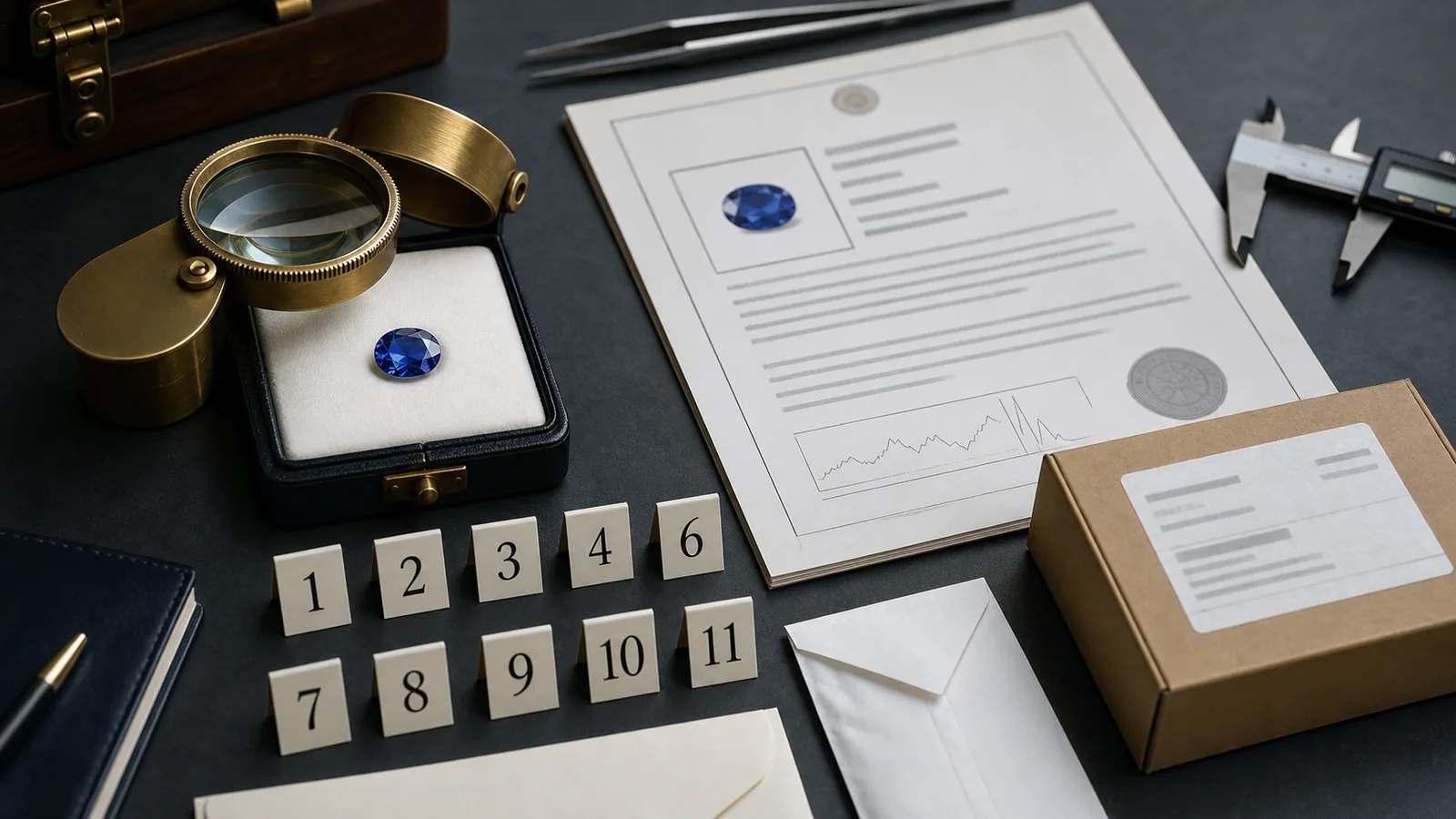
A polished website can be built in a weekend. A genuine trading history, consistent treatment disclosure and a returns process that works across borders cannot.
That is the central problem when choosing a gemstone dealer online. The visible signals are easy to manufacture. The useful signals are distributed across company records, laboratory reports, policies, trade history and the way the dealer answers precise questions.
Start with an independent gemstone dealer directory, then run the checks below yourself. A directory should narrow the field, not replace buyer judgement.
Disclosure: I founded GemsVerified. I am linking to the methodology and records because they are directly relevant, not presenting the directory as an independent endorsement of itself.
1. Confirm the legal business identity
Find the trading name, legal entity, physical location and a working contact method. Search the relevant company register where one exists. The name on the invoice and bank account should make sense beside the name of the business you researched.
A sole trader or small family firm is not automatically risky. The warning sign is an identity that changes between the website, invoice, payment request and social profile without a clear explanation.
2. Separate longevity from social popularity
A ten-year trading history is evidence of continuity. Fifty thousand followers are evidence of audience size. They are not interchangeable.
Check domain history, archived pages, trade-show appearances and dated mentions from independent organisations. Reviews can add context, but review count alone is vulnerable to manipulation and selection bias.
3. Ask for treatment disclosure in writing
Treatments can alter colour, clarity, durability and value. GIA explains why treatment disclosure matters, including treatments that are difficult for an untrained buyer to detect.
Ask a direct question: what treatments have been detected, what treatments have not been detected, and which claims come from the dealer rather than an independent laboratory? Keep the answer with the invoice.
4. Read the laboratory report, not the logo
A familiar laboratory name is useful only when the report matches the stone and answers the questions relevant to its value. Check the report number on the laboratory’s own website where verification is available. Compare species, variety, weight, measurements, shape and photograph.
Do not assume every coloured-stone report assigns a quality grade. GIA, for example, identifies coloured stones, lists detectable treatments and may provide a geographic-origin opinion for eligible material. That is different from declaring the stone a good purchase or confirming the seller’s price.
5. Match the report to the actual stone
A genuine report can still be paired with the wrong gemstone. Measurements, weight, cut and visible features should be consistent. For a significant purchase, have an independent gemologist confirm the match during the return period.
6. Treat origin as an expert opinion
Origin can affect price, but it is not a simple passport field. Laboratories compare inclusions, chemistry and reference material to reach an opinion. Different deposits can overlap, and not every stone is eligible for a meaningful origin call.
Ask which laboratory made the origin determination and whether the price depends heavily on that conclusion. If it does, independent confirmation may be worth the cost.
7. Demand useful photography and video
Request neutral-light video, a face-up view, side views and footage that shows windowing, extinction, colour zoning and surface-reaching features. Highly saturated studio footage may sell the colour while hiding how the stone behaves in normal light.
The goal is not perfect consistency across every screen. It is enough evidence to understand what the dealer’s hero image does not show.
8. Read the return policy as a logistics document
“Returns accepted” is incomplete. Check the number of days, when the clock starts, who pays insured return shipping, whether international returns are allowed, whether laboratory verification is permitted and which fees are non-refundable.
The inspection period needs to be long enough to arrange an independent opinion. If the dealer forbids examination or removes the right to return once a gemologist sees the stone, walk away.
9. Check how payment pressure is applied
Bank transfer is common in the trade, especially for cross-border transactions. It also offers less consumer protection than a card payment. The risk increases when the seller combines an irreversible method with urgency, a new account name or a last-minute change of bank details.
Verify changed payment instructions through a previously confirmed communication channel. Never rely only on a new email in the same thread.
10. Look for specific expertise
A dealer who specialises in sapphires should be able to discuss heat, diffusion, colour zoning, origin reports and how the stone was selected. Useful expertise sounds specific and bounded. It includes “I do not know” when the evidence does not support a stronger answer.
11. Test the after-sale process before paying
Ask who handles a report mismatch, customs delay, chipped stone or return. Get the answer in writing. Good dealers describe a process. Weak dealers return to assurances about reputation.
The decision rule
No single signal proves that a dealer is reputable. Use agreement across independent signals: identifiable business, verifiable history, precise disclosure, a report that matches the stone, realistic media, workable returns and calm payment handling.
If the value is material to you, pay an independent expert to inspect the gemstone. Verification lowers uncertainty; it does not eliminate it.
Frequently asked questions
What is the safest way to pay a gemstone dealer online?
Use a method with appropriate buyer protection when available, verify the payee identity and confirm any changed instructions separately. For high-value bank transfers, agree the inspection and return terms before sending funds.
Does a laboratory report prove a gemstone is worth the price?
No. A report can identify material, disclose detectable treatments and sometimes provide an origin opinion. Price also depends on colour, cut, clarity, rarity, market conditions and the quality of the commercial offer.
Are online gemstone dealer reviews reliable?
They are one input. Give more weight to detailed, dated reviews that describe the stone, transaction and resolution of any problem. Do not let review count override company identity, disclosure and report verification.