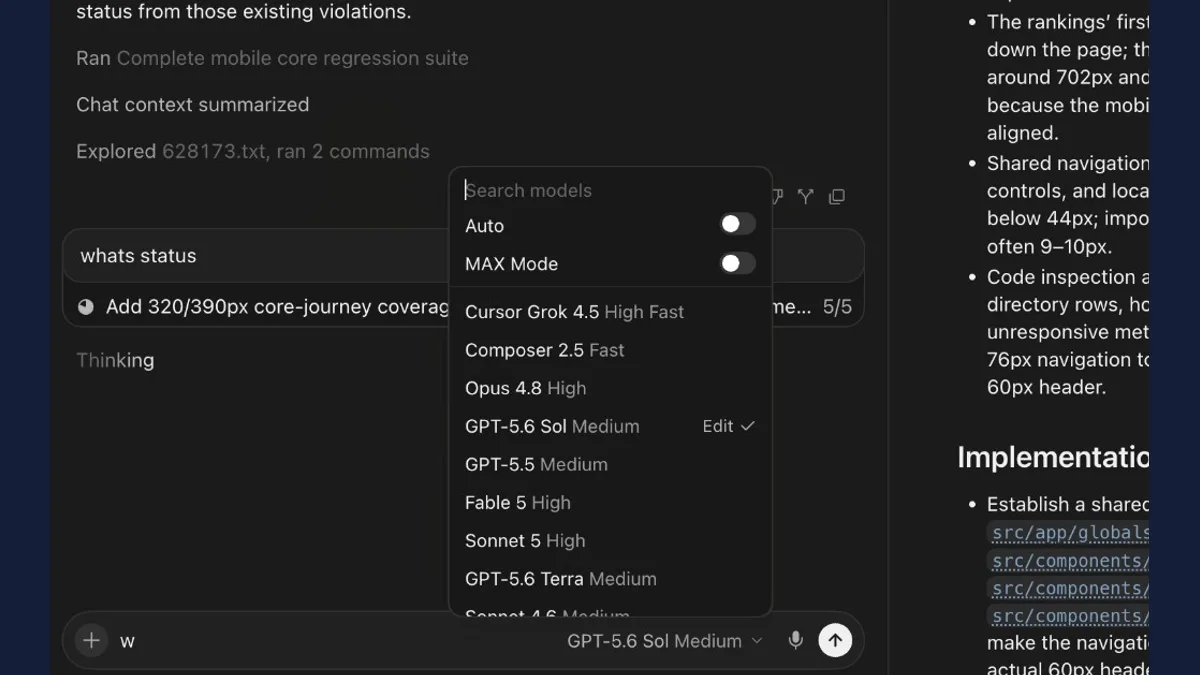
在过去的十天里,我做了一件略微有些执着的事。我在Cursor中能接触到的每一个主要AI编码模型上运行了相同的真实项目工作——规划、实现、内容编写、重构,等等——并且我认真记录了哪一个真正物有所值。这不是一个合成基准测试图表。这是当我用每个模型在真实截止期限内发布真实功能和真实文字时发生的情况。上面的屏幕截图是我的Cursor模型选择器,十天结束时,我对列表中几乎每个名字都形成了坚定的看法。
以下是简短版本,之后是详细内容:没有单一的赢家。有最适合规划的模型,有最适合编写的模型,有原始实现速度最快的模型,还有最具价值的模型。把"哪个AI最适合编码?"当作一个问题本身就是错误。下面是确切的哪个模型赢得了哪项工作、原因,以及我在与所有这些模型共存后的个人想法。
核心要点:在规划和思考方面,Fable、Claude Opus 4.8和GPT-5.6 Sol领先,Grok的表现比我预期的要好。在内容方面,Claude胜出,GPT-5.6紧随其后。对于快速、廉价的实现,Cursor的Auto Composer在性价比方面无与伦比。对于日常协作和令牌预算,Claude Sonnet 5是我整天开着的模型。
我如何运行这些测试
Claude Max 和 Cursor Ultra 的费用都是我自己掏钱,我有意地大手笔消耗配额。没有人赞助我。我把每月的账单当成学费,我认为这是你现在能买到的最好的软件教育。十天在这些模型上的实际交付工作让我了解到的 2026 年事物的真实构建方式,比在哈佛或斯坦福读一个学期要多得多。这些工作是在真实的问题和真实的截止期限上进行的,而不是听讲座。当我说某个模型性价比最高时,那是因为我一直在看着自己的配额余额在它工作的时候。
我测试了哪些AI编码模型?
我在10天的正常工作中,在Cursor内测试了来自四个供应商的八个模型。按制造商分组能保持整体画面清晰:
- Cursor Auto (Composer):Composer 是 Cursor 自有的编辑器内模型,针对代理循环内的速度进行了调优。
- Claude Sonnet 5、Claude Opus 4.8 和 Fable — 我有权限使用的 Anthropic 系列,从均衡的 Sonnet 主力到更强大的 Opus 推理器,再到更新的、重视规划的 Fable。
- GPT-5.6 Sol 和 GPT-5.6 Terra — OpenAI 的最新版本,Sol 针对推理进行了更强的调优,Terra 是它的同级版本。
- Cursor Grok — xAI 的 Grok 集成到 Cursor 中作为代理模型。
每个模型都看到了相同类型的任务:需要分解的模糊功能需求、多文件实现、一些复杂的重构,以及长篇写作。下面是它们在各个工作中的实际表现。
我是如何测试这些 AI 编码模型的?
我在 Cursor 内连续十天对每个模型进行了相同实际工作的测试,而不是用虚拟提示。这意味着给每个模型分配我实际进行的四类工作的公平组合:从模糊的简报规划功能、在多个文件中实现功能、重构现有代码和撰写长篇内容。只要可能,我会把相同的任务交给多个模型,这样就能进行直接的对比。
我有意不依赖公开的基准测试。排行榜得分很少能预测模型在混乱的真实代码库中的表现,那里有既定的约定、半成品功能和它自己的历史。我信任的唯一测试是一个模型是否能把我实际需要完成的东西推进到我愿意署名的状态。下面的所有内容都是这种判断,而不是记分卡上的数字。
哪个 AI 模型最适合规划和思考?
在规划和深度思考方面,Fable、Claude Opus 4.8 和 GPT-5.6 Sol 是明显的佼佼者 — Grok 也表现得相当不错。我所说的"规划"是指那些不那么引人注目但决定功能是否能顺利上线的工作:理解一个模糊的请求、将其分解成正确的步骤序列、在写一行代码之前就发现边界情况,以及注意到两周后在生产环境中会出问题的东西。
Fable 是最让我惊讶的一个。在长时间的对话中,它能够掌握整个问题的全貌,并持续推理二阶后果,而不是匆忙开始编码。Opus 4.8 是思维最有条理的——它会列出假设、权衡和一个你可以真正交给另一个模型去执行的有序计划。GPT-5.6 Sol 也有很强的规划能力,往往最明确地阐述风险和故障模式。
Grok 值得特别提一下,因为它是最容易被低估的。在架构思考和"我应该以这种方式来做吗?"的讨论中,它与声誉远高于它的模型相比毫不逊色。如果你之前把 Grok 当作一个噱头而忽视了它,那观点已经过时了——在 Cursor 中,它是一个可信赖的规划伙伴。
哪个 AI 模型最适合真正实现和发布代码?
如果你提前规划得足够好,一个较长的 Fable 对话可以在一到三个提示词内将一个想法从提示词阶段带到已部署——真正是你想象中的东西,而不是它的粗糙近似版本。这是十天中最显著的实现成果。问题在于前半句:你必须规划得好。Fable 比我用过的任何其他模型都更看重一份好的摘要。
在实现质量上,Opus 4.8 和 Grok 不相上下,大致可比。两者都能写出在多个文件间保持一致的代码,两者都愿意做出判断而不是停滞不前,两者在一个步骤失败时都能很好地恢复。如果 Fable 是"规划一次,一次性发布"的模型,那么 Opus 4.8 和 Grok 就是当工作更加迭代时你会依赖的可靠的日常构建者。
我不断重新学到的教训:实现质量主要来自规划质量的下游。规划得最好的模型也是发布得最好的,因为大多数差的 AI 代码本质上是一个差的或缺失的计划穿着语法外衣。
哪个 AI 模型写的内容最好?
在内容和文案方面,Claude 是赢家,GPT-5.6 紧跟其后。这不仅仅是风格的问题——Claude 对克制的本能更好。它知道何时停止,删除冗余内容,并在整个长文本中保持一致的声音,而不会陷入通用的"作为一个 AI"的语调。
GPT-5.6 紧跟其后,有时甚至领先,特别是在结构上——它善于将凌乱的观点组织成清晰的大纲,并且在可扫读、答案优先的格式上很强,这种格式既能获得读者的认可,也能获得 AI 搜索引擎的认可。如果我在起草一些有观点且人性化的内容,我会选择 Claude。如果我在将密集信息整理成紧凑的结构,GPT-5.6 是我会去验证的对象。
差异在第二稿时最明显。让 Claude 去精简一篇文章,它会使其更锐利而不会削弱声音;让大多数其他模型去做,它们会连同冗余内容一起磨掉个性。对于任何听起来必须像人写的东西——像这样的评论、落地页、经过思考的回复——这种关于什么要保留的直觉比任何单一的聪慧句子都更值钱。
最快且性价比最佳的AI编码模型是什么?
Cursor 的 Auto Composer 是我测试过的原始实现速度最快的模型,从性价比来看它就是列表中最好的模型。它在编码的实际机制上异常敏捷——读取文件、进行编辑、运行循环——而且因为 Composer 是 Cursor 自有的模型,它的定价是为了被持续使用而不是被配额限制。
Cursor Ultra 每月 $200,提供 Pro 版本 20 倍的使用配额,为整天生活在编辑器里的开发者而生。Composer 是 Cursor 自有的模型,定价是为了持续运行而不是被配额限制。
这个价值点比基准测试更重要。一个你可以整天运行而不用看计量器的模型会改变你的工作方式。对于不需要重型推理器的大量日常编码工作——连接组件、修复失败的测试、机械性重构——Composer 是我现在首先使用的默认选择,只有当问题值得时我才会升级到更强大的模型。
Claude Sonnet 5适合配对编程和日常协作吗?
适合——对于日常协作、规划和内容写作,在合理的token预算内,Claude Sonnet 5真的很厉害。它是我打开时间最长的模型。它的规划能力足以信任,写作能力足以起草真实文案,而且两者都不会像更重型模型那样消耗token。
考虑到token使用情况,Sonnet 5是这个群体中的效率冠军。它能给你旗舰级推理器的大部分质量,但成本只是一小部分,这使它成为构成大多数真实工作的长时间、闲聊式的往返对话的正确默认选择。Opus、Fable和GPT-5.6 Sol用于解决难题;Sonnet 5处理介于两者之间的一切。
AI编码模型的对比如何?
如果你每项工作只记住一件事,就记住这个评分卡:
| 任务 | 获胜者 | 亚军 | 为什么它获胜 |
|---|---|---|---|
| 规划和思考 | Fable、Opus 4.8、GPT-5.6 Sol | Grok | 在编写任何代码之前,分解模糊的需求并发现边界情况。 |
| 一次性实现 | Fable | Opus 4.8 和 Grok | 在一个计划周密的长会话中,从想法到部署只需 1 到 3 个提示。 |
| 日常构建者 | Opus 4.8 | Grok | 用于迭代发布工作的可靠多文件构建器。 |
| 内容写作 | Claude | GPT-5.6 | 更好的约束、一致的声音和更锐利的第二稿。 |
| 速度和价值 | Cursor Auto Composer | Claude Sonnet 5 | 最快的实现方式,定价让您全天使用而无需限额。 |
| 在代币预算范围内协作 | Claude Sonnet 5 | Opus、Fable、GPT-5.6 Sol | 以代币成本的一小部分获得大部分旗舰质量。 |
我接下来要测试哪些 AI 编码模型?
Meta 今早发布了一个新模型,它在我的测试清单上排名靠前。我想看看它是否能与规划层级相媲美——这现在才是衡量标准,不是原始代码补全能力。同时我还准备测试谷歌的 Gemini 和 Kimi,两者我都还没在 Cursor 中进行过十天的完整测试。
关于设计方面,我已经有数据了。我用过 Kimi 和 MiniMax 做设计工作,两者在 UI 设计规划上都表现得相当不错——能把一个模糊的产品想法转化成合理的布局、层级和组件决策,而代码还没写呢。这是一项不同于写代码的技能,值得单独追踪,因为规划界面规划得好的模型不一定是实现得最快的模型。
常见问题
2026 年最好的 AI 编码模型是什么?
没有单一的最佳 AI 编码模型——取决于具体任务。Fable、Claude Opus 4.8 和 GPT-5.6 Sol 在规划上领先,Claude 在内容上领先,Cursor 的 Auto Composer 在速度和性价比上胜出。根据任务选择模型,而不是追求单一赢家。
哪个AI模型最适合规划和架构?
Fable、Claude Opus 4.8 和 GPT-5.6 Sol 是最强的规划者,Grok 紧随其后。它们将模糊的需求分解为有序的步骤,并在代码编写前就发现边界情况,这决定了一个功能是否能顺利上线。
哪个AI模型代码写得最快?
Cursor 的 Auto Composer 在编辑器内的原始实现速度最快,它也是最超值的选择,因为它的定价适合持续使用。对于机械性的、范围明确的编码工作,它是首选方案,只有在必要时才升级到更强大的推理模型。
Claude 还是 ChatGPT 更适合编程?
内容和文案方面,Claude 领先,GPT-5.6 紧随其后。规划方面,GPT-5.6 Sol 和 Claude Opus 4.8 都是顶级的。日常合作且考虑 token 预算,Claude Sonnet 5 是最突出的。实际上我两个都用,根据任务选择。
哪些AI模型最适合UI设计?
Kimi 和 MiniMax 都在 UI 设计规划上表现出色——将产品理念转化为布局、层级和组件结构,无需任何代码。设计规划是一项与代码实现不同的技能,所以最好的设计模型不一定是最好的编码器。
哪个AI编码模型性价比最高?
Cursor 的 Auto Composer 提供最佳性价比——速度快,定价适合整天运行而不需要节流。Claude Sonnet 5 是具备推理能力的模型中性价比最高的,因为相对于它提供的质量,token 使用量很低。
这就是我十天后的现状:Composer 用于速度和价值,Sonnet 5 用于日常协作,Fable、Opus 4.8 和 GPT-5.6 Sol 用于需要真正思考的问题,Claude 用于需要真正措辞的场景,Grok 作为被低估的全能型选手。接下来是 Meta 的新模型、Gemini 和 Kimi——一旦它们赢得或失去在我的选择中的位置,我会回报。