Identidade de Marca, Design de Logo e Busca Global de Marca Registrada
Um guia prático para fundadores lançando uma marca nova. O que um sistema de identidade real contém, como validar um nome nas principais jurisdições, e onde investir seu dinheiro. Sem apelos comerciais, escrito a partir de 12.000+ sites de experiência prática.
O QUE IDENTIDADE DE MARCA REALMENTE É
Identidade de marca é o sistema de ativos visuais e verbais que tornam uma empresa reconhecível em todas as superfícies que um cliente toca. O logo é um componente. Uma identidade completa inclui as regras e ativos necessários para aplicar esse logo em embalagem, web, app, redes sociais, sinalização e impressos sem que o resultado perca coerência conforme se expande.
Se você só tem um logo, tem um ponto de partida. Se você tem um logo, sistema tipográfico, paleta de cores, guia de voz, templates de aplicação e um documento de diretrizes, você tem uma identidade de marca que consegue ser lançada e sobrevive ao contato com um time de marketing.
O QUE UM SISTEMA COMPLETO DE IDENTIDADE DE MARCA CONTÉM
Nove componentes, mais ou menos na ordem em que são construídos. O sistema de logo vem primeiro: uma marca primária, uma marca secundária, um monograma ou favicon, lockups para layouts horizontal e empilhado, zonas seguras, tamanhos mínimos e formatos de arquivo de SVG a favicon até vetor pronto para bordado. Tipografia vem depois: uma fonte display, uma fonte para corpo de texto, uma fonte UI, hierarquia com tamanhos, pesos, alturas de linha e uma fallback stack definida para web.
Cor vem depois, primária, secundária, accent e funcional (sucesso, aviso, perigo), com cada par testado para contraste WCAG AA mínimo de 4.5:1 para corpo de texto e 3:1 para texto grande. Imagem define direção fotográfica com referências de mood e exemplos de não-fazer, mais estilo de ilustração se relevante. Iconografia usa uma única fonte: Lucide, Phosphor, ou um conjunto custom com um peso de stroke, um raio de canto, uma grid.
Voz fornece exemplos escritos de como a marca soa em três contextos: copy de marketing, UI de produto e respostas de suporte. Exemplos de não-fazer são tão valiosos quanto exemplos de fazer nesta seção. Layout define a grid, scale de espaçamento, larguras de container e breakpoints, token-nomeados para que a engenharia possa implementar sem re-derivar os valores. Motion define durações, curvas de easing e os princípios para o que deve e o que não deve animar. O documento guidelines traz tudo para uma única fonte de verdade, seja em PDF, Notion ou um portal de brand hospedado.
- Map the category. Say every competitor name out loud and write down what they have in common. Crowded sounds, repeated prefixes, the suffix everyone reached for in 2019. You cannot argue for a name without something to argue against.
- Generate wide, then stop. Thirty candidates is thin. Three hundred is procrastination. Most territory maps are exhausted somewhere around a hundred.
- Screen hard. Say it, spell it, search it. Read it down a phone line to someone who has never seen it written. If two of those three are difficult, the name will cost you money every year you own it.
Shortlist and defend. Take two or three survivors, run a first-pass registry and domain screen with the business name generator and trademark checker, then hand the survivors to counsel. Filing before that pass is how rebrands happen in year two.
On budget: naming is a phase inside the identity numbers further down this page, not a separate invoice, unless you hire a naming specialist on their own. Ask for it to be priced and timeboxed separately in the proposal anyway. If naming disappears into a single identity line item you cannot tell whether you are paying for twenty candidates or two hundred, and you lose the option to stop after the naming phase when the shortlist comes back wrong. Trademark search and filing sit outside that number again, because fees move with jurisdiction, class count and whether anyone objects.
POR QUE A BUSCA DE MARCA IMPORTA ANTES DE VOCÊ LANÇAR
O custo de descobrir tarde é brutal. Se você lança um nome que infringe uma marca existente na sua categoria, você pode ser forçado a fazer rebrand sob cease-and-desist, perder seu domínio, perder handles de redes sociais que você passou doze meses construindo, e potencialmente pagar indenizações por cima. Eu vi acontecer com duas startups nos últimos cinco anos. Ambas fizeram rebrand em menos de noventa dias e ambas disseram a mesma coisa depois: uma busca de trinta minutos antes de commitar teria economizado tudo isso.
Uma busca preliminar de registro pode remover conflitos óbvios antes de você se comprometer com identidade, domínios ou embalagem, mas não pode provar que um nome está limpo. Limpeza mais ampla por um profissional de marca registrada qualificado deve acontecer antes de um lançamento de alto investimento ou arquivo.
Descriptive compound: HostList.io
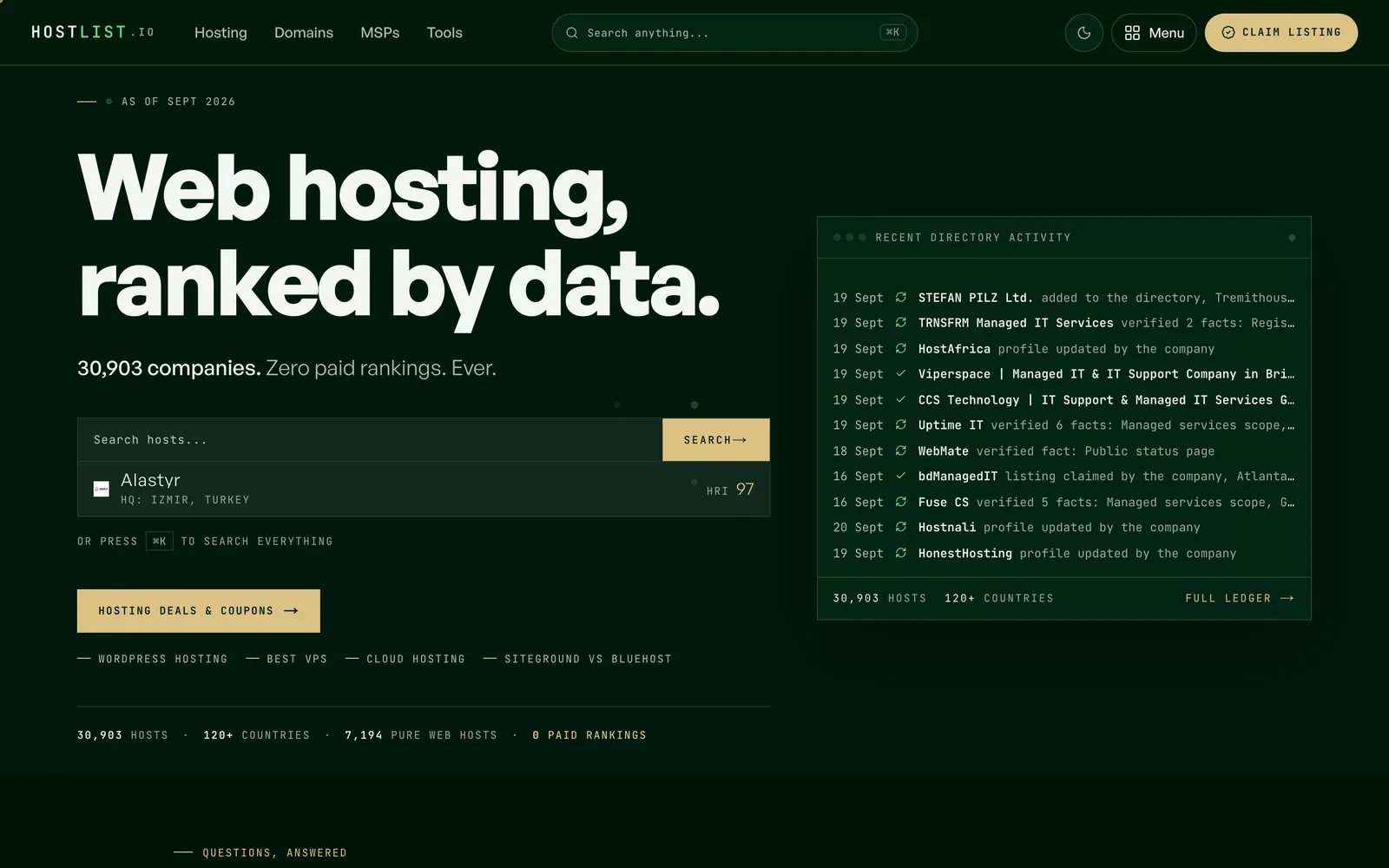
HostList.io says what it is before you read a word of copy. Host, plus list. The wordmark keeps the TLD inside the lockup, letterspaced in mono, with HOST set light and LIST picked out in green so the two halves of the compound stay readable as two ideas rather than one long word. Descriptive names are cheap to explain and expensive to protect. You get instant comprehension and a weaker trademark position, because registries are reluctant to hand anyone a monopoly on ordinary category words.
So the identity has to supply the distinctiveness the name cannot. Here that is the near-black green ground, the heavy grotesque display against mono data type, and a claim the business can be held to: thirty thousand nine hundred and three companies, zero paid rankings, ever. A category-word name plus a specific checkable promise is what stops a descriptive brand reading as generic.
The domain as the name: girl.dad
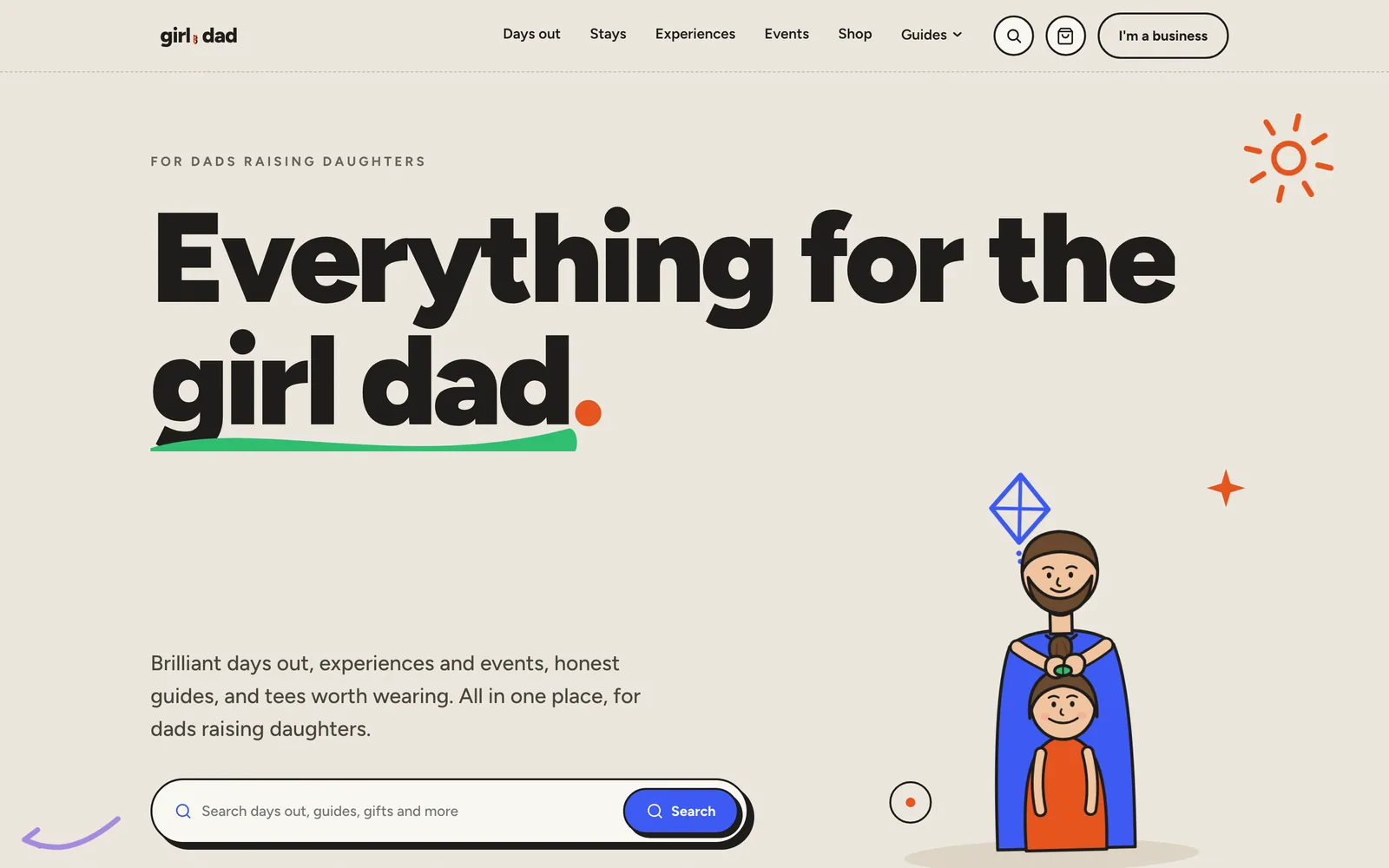
girl.dad does not have a domain. It is one. The TLD finishes the phrase, so the address bar and the wordmark are the same three syllables, and there is no gap between what someone hears and what they type. That is the most efficient naming pattern available right now, and the most exposed: you are renting the back half of your brand from a registry. If pricing or policy on .dad moves, you move with it in a way a .com owner does not.
It was worth taking here because the phrase already existed in the language. The name had no new word to teach anyone. The identity then leans into the warmth the phrase promises rather than fighting it: heavy geometric lowercase, an off-white ground instead of white, an outline illustration set that stays friendly without going childish, and a single orange glyph between the two words as the only place the logo does anything clever. That is about the right amount of clever.
Category plus claim: GemsVerified.com
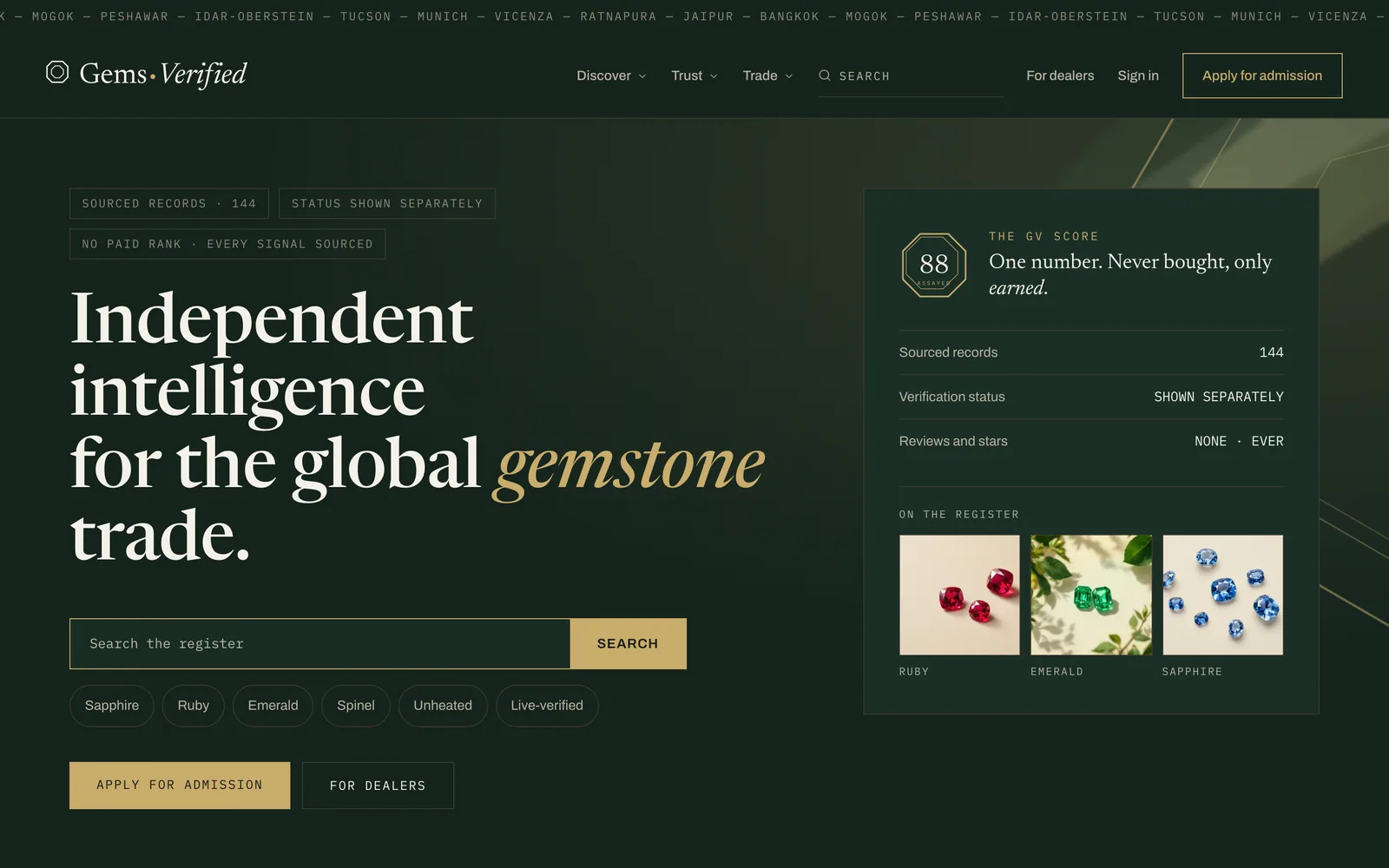
GemsVerified puts the promise inside the name. Category noun, then the thing the product does to it. The pattern buys you positioning for free and writes a cheque the business then has to honour, because a brand called Verified that ships anything unverified has a bigger problem than a naming problem.
Which is why the identity is built as evidence rather than decoration. The mark is an octagonal assayer stamp. The palette reads closer to an auction house than a marketplace, deep green and gold, serif display against mono labels. And the homepage leads with receipts instead of adjectives: one GV score, a hundred and forty-four sourced records, verification status shown separately, reviews and stars none, ever. When the name makes a claim, every surface has to carry proof of it. Harder identity brief. Much better long-term position.
Pick the pattern first, because it decides the brief
Descriptive names need the identity to supply distinctiveness. Domain-phrase names need it to supply warmth and a sense of permanence the registry does not give you. Claim names need it to supply evidence, on every surface, forever. Same three designers, same budget, three completely different jobs. That is the argument for buying naming and identity from the same conversation even when they arrive as two separate invoices.
COMO FAZER UMA BUSCA DE MARCA GLOBAL POR CONTA PRÓPRIA
Este é o fluxo de trabalho prático. Duas horas, gratuito, antes de você se comprometer com um nome. A ordem importa porque detectar um conflito cedo economiza o custo de buscar jurisdições mais adiante na cadeia.
Comece com o sistema de busca de marca registrada do USPTO para os Estados Unidos. Busque redação exata e variantes próximas, depois revise bens ou serviços relacionados em vez de confiar apenas em um número de classe Nice. Uma triagem automatizada preliminar é útil para criação de lista curta, mas o USPTO recomenda uma busca de limpeza mais ampla além de registros federais.
Mova para o TMview do EUIPO ou eSearch plus para aplicações e registros de marca comercial da União Europeia. Depois use o Global Brand Database da WIPO para registros do Sistema Madrid e coleções nacionais ou regionais participantes. WIPO recomenda pesquisar registros nacionais e regionais relevantes diretamente porque o banco de dados global não contém todas as marcas registradas em todos os órgãos.
MARCA REGISTRADA VS DIREITO AUTORAL VS DIREITOS DE DESIGN
Esses três protegem coisas diferentes e as pessoas os confundem constantemente, às vezes no meio de um processo de depósito onde a confusão custa dinheiro real.
Trademark protege nomes, logos, slogans e outros identificadores de origem usados em comércio. Qualquer coisa que sinalize "este produto vem desta empresa". Registro é jurisdicional, um trademark dos EUA não o protege na Alemanha, e a proteção expira se não renovada, tipicamente a cada dez anos.
QUANDO CONTRATAR UM ADVOGADO DE MARCA REGISTRADA
Contrate um profissional de marca registrada qualificado assim que tiver selecionado dois ou três nomes candidatos e antes de fazer o registro ou comprometer gastos significativos de lançamento. Buscas automatizadas e autodirigidas podem perder similaridade fonética, bens ou serviços relacionados, direitos não registrados e questões específicas da jurisdição.
A ajuda profissional importa especialmente quando um registro abrange múltiplas jurisdições ou usa o Sistema de Madri. Profundidade de busca, taxas governamentais, número de classes, requisitos de representação local e objeções podem alterar o escopo materialmente. Peça uma estimativa escrita jurisdição por jurisdição cobrindo limpeza, registro, respostas e responsabilidades de renovação.
Move to EUIPO TMview or eSearch plus for European Union trade mark applications and registrations. Then use the WIPO Global Brand Database for Madrid System records and participating national or regional collections. WIPO recommends searching relevant national and regional registers directly because the global database does not contain every mark filed with every office.
UKIPO is separate from EU filings since Brexit, so check it independently. National offices for key markets follow — IP India, Japan Patent Office, KIPRIS for South Korea, CNIPA for China, IP Australia. Cover every market where you operate, sell or plan a meaningful launch.
Domain availability comes next — check .com, .co, .io, .ai, plus your country TLD. A name without at least one premium domain at reasonable cost is functionally untenable. Social handles on LinkedIn, X, Instagram, YouTube, GitHub, and TikTok matter for brand integrity; tools like Namechk run them in parallel. Finally, Google the candidate name plus your category to surface unregistered common-law marks. Many jurisdictions still recognise these and they can block your registration even though the prior user never filed.
QUANTO TEMPO UM PROJETO DE IDENTIDADE DE MARCA LEVA
Três semanas para um brand de startup apertado. Um designer, decisões rápidas, um founder único fazendo a chamada. Logo, tipo, cor, guidelines básicos. O output é viável mas mínimo, suficiente para lançar, não suficiente para escalar uma equipe de marketing.
Seis a dez semanas para um engajamento típico de pequeno negócio. Sistema de logo completo, sistema tipográfico, sistema de cores, aplicações em digital e print, documento de diretrizes. Aqui é onde a maioria das startups financiadas e pequenos negócios se situam.
Doze a vinte semanas para um programa de identidade corporativa. Pesquisa, naming se necessário, sistema de identidade, aplicações em trinta ou mais superfícies, animação, portal de gestão de marca. A maior variável entre todos os três timelines é a velocidade de decisão, não o tempo de design. Projetos que perdem prazos quase sempre o fazem porque o cliente não consegue decidir entre duas direções, não porque o estúdio não consegue entregar.
Design rights protect the ornamental appearance of a product — the shape of a bottle, the unique layout of an interface, the silhouette of a piece of furniture. These are called design patents in the United States and design rights elsewhere. A logo is typically registered as a trademark; the artwork inside the logo is also automatically protected by copyright; the product the logo appears on may have its own design rights. They stack rather than substitute.
O QUE IDENTIDADE DE MARCA CUSTA EM 2026
Trabalho indie ou freelancer custa de mil e quinhentos a oito mil dólares americanos. Logo, tipografia, cor, aplicações básicas, diretriz de uma página. Certo para startups validando uma ideia ou fundadores solo chegando do zero ao lançável.
Engajamentos com estúdio custam de quinze mil a quarenta e cinco mil. Sistema de identidade completo, aplicações em digital e print, documento completo de diretrizes. Certo para startups financiadas e pequenos negócios onde a marca carregará pressão de vendas séria nos próximos doze meses.
POR QUE ESTOU ESCREVENDO ESTE GUIA
Não sou advogado de propriedade intelectual e isto não é aconselhamento jurídico. Use um profissional de marca registrada qualificado para limpeza, registro e aconselhamento sobre um nome específico.
Co-fundei Seahawk Media em 2018 e lancei doze mil websites desde então, a maioria deles carregando o trabalho de brand de agências, estúdios e equipes in-house nos Estados Unidos, Reino Unido, Europa e Ásia. Eu vi o que funciona em produção em escala: quais formatos de guidelines são realmente seguidos, quais sistemas de logo se mantêm em escala de favicon e billboard, e quais paletas de cor sobrevivem ao contato com uma equipe de marketing que está lancando conteúdo cinco vezes por semana.
Pessoalmente co-fundei Brandy HQ, um espaço de trabalho de identidade de marca que ajuda fundadores a lançar logos, paletas e diretrizes sem o engajamento de estúdio de seis meses. O produto existe porque o espaço entre trabalho freelancer do Fiverr e um engajamento de estúdio de quarenta e cinco mil dólares é o lugar onde a maioria das marcas em estágio inicial realmente precisa estar. Este guia cobre identidade prática e fluxo de trabalho de busca preliminar; advogados qualificados lidam com limpeza legal e registro.
WHAT BRAND IDENTITY COSTS IN 2026
Indie or freelance work runs one thousand five hundred to eight thousand US dollars. Logo, type, colour, basic applications, one-page guideline. Right for startups validating an idea or solo founders getting from zero to launchable.
Studio engagements run fifteen thousand to forty-five thousand. Full identity system, applications across digital and print, full guidelines document. Right for funded startups and small businesses where the brand will carry serious sales pressure within twelve months.
Corporate identity programmes run seventy-five thousand to three hundred thousand. Research, naming, identity, thirty-plus application surfaces, motion, brand-management portal. Right for funded scale-ups, enterprise rebrands, and acquisitions that need to consolidate brands.
Budget trademark work separately from design. Professional-search and filing fees vary materially by country, number of classes, application route and whether objections arise, so request a written jurisdiction-by-jurisdiction scope.
WHY I AM WRITING THIS GUIDE
I am not an IP attorney and this is not legal advice. Use a qualified trademark professional for clearance, filing and advice about a specific name.
I co-founded Seahawk Media in 2018 and have shipped twelve thousand websites since — most of them carrying the brand work of agencies, studios, and in-house teams across the United States, United Kingdom, Europe, and Asia. I have watched what works in production at scale: which guideline formats actually get followed, which logo systems hold up at favicon and billboard scale, and which colour palettes survive contact with a marketing team that is shipping content five times a week.
I personally co-founded Brandy HQ, a brand-identity workspace that helps founders ship logos, palettes, and guidelines without the six-month studio engagement. The product exists because the gap between freelance Fiverr work and a forty-five thousand dollar studio engagement is the place most early-stage brands actually need to be. This guide covers practical identity and preliminary-search workflow; qualified counsel handles legal clearance and filing.