ブランド・アイデンティティ、ロゴデザイン、グローバル商標調査
新しいブランドをローンチするファウンダー向けの実践ガイド。本当のアイデンティティシステムに含まれるもの、主要な管轄区域でネーミングをクリアする方法、どこに投資すべきか。売込みなし、12,000以上のサイト運営による実践経験に基づいて執筆。
ブランド・アイデンティティとは実際のところ何か
ブランド・アイデンティティは、企業が顧客が接するあらゆるタッチポイントを通じて認識されるようにする、ビジュアル及びバーバルアセットのシステムである。ロゴは1つのコンポーネントに過ぎない。完全なアイデンティティには、パッケージング、ウェブ、アプリ、ソーシャル、サイナージ、プリントにわたってそのロゴを適用し、展開に伴って一貫性を失わないようにするために必要なルールとアセットが含まれる。
ロゴだけなら、スタート地点がある。ロゴ、タイプシステム、カラーパレット、ボイスガイド、アプリケーションテンプレート、ガイドラインドキュメントがあれば、マーケティングチームとの接触後も機能し生き残るブランド・アイデンティティを持つことができる。
完全なブランド・アイデンティティシステムに含まれるもの
ざっくり9つの構成要素があり、構築の順序もほぼこの通りです。ロゴシステムが最初で、プライマリマーク、セカンダリマーク、モノグラムまたはファビコン、横組みとスタック組みのロックアップ、セーフゾーン、最小サイズ、SVGからファビコン、刺繍対応のベクターまでファイル形式を含みます。次にタイポグラフィで、ディスプレイ用書体、本文用書体、UI用書体、サイズ・ウェイト・行高による階層構造、Web用のフォールバックスタックを定義します。
カラーはその次で、プライマリ、セカンダリ、アクセント、機能色(成功、警告、危険)があり、すべての組み合わせをWCAG AA準拠で本文テキストは最低4.5:1、大型テキストは3:1のコントラスト比でテストします。イメージリーは写真の方向性をムード参考と悪い例で定義し、必要に応じてイラストスタイルも示します。アイコノグラフィは単一ソース(LucideかPhosphorか独自セット)を使い、ストロークウェイト・コーナー半径・グリッドはすべて統一します。
ボイスはブランドがどのように聞こえるか、マーケティングコピー・プロダクトUI・サポート返信の3つの文脈で書かれた例を示します。悪い例は良い例と同じくらい価値があります。レイアウトはグリッド・スペーシングスケール・コンテナ幅・ブレークポイントを定義し、エンジニアが値を再導出することなく実装できるようトークン名を付けます。モーションは継続時間・イージング曲線・何がアニメーションすべきか、すべきでないかの原則を設定します。ガイドラインドキュメントはすべてを単一の情報源にまとめ、PDF・Notion・ホストされたブランドポータルのどこに置くかは問いません。
- Map the category. Say every competitor name out loud and write down what they have in common. Crowded sounds, repeated prefixes, the suffix everyone reached for in 2019. You cannot argue for a name without something to argue against.
- Generate wide, then stop. Thirty candidates is thin. Three hundred is procrastination. Most territory maps are exhausted somewhere around a hundred.
- Screen hard. Say it, spell it, search it. Read it down a phone line to someone who has never seen it written. If two of those three are difficult, the name will cost you money every year you own it.
Shortlist and defend. Take two or three survivors, run a first-pass registry and domain screen with the business name generator and trademark checker, then hand the survivors to counsel. Filing before that pass is how rebrands happen in year two.
On budget: naming is a phase inside the identity numbers further down this page, not a separate invoice, unless you hire a naming specialist on their own. Ask for it to be priced and timeboxed separately in the proposal anyway. If naming disappears into a single identity line item you cannot tell whether you are paying for twenty candidates or two hundred, and you lose the option to stop after the naming phase when the shortlist comes back wrong. Trademark search and filing sit outside that number again, because fees move with jurisdiction, class count and whether anyone objects.
なぜ商標検索はローンチ前に重要なのか
遅れて気づくコストは大惨事です。既存商標と競合するカテゴリで名前を立ち上げたら、中止命令で強制的にリブランドさせられ、ドメインを失い、12ヶ月かけて構築したSNSハンドルを失い、さらに損害賠償を払わされる可能性があります。過去5年間で2つのスタートアップがそれを経験したのを見ています。どちらも90日以内にリブランドしましたが、その後両社とも同じことを言いました。確定前に30分の調査をしていれば済んだと。
予備的な登録簿検索は、アイデンティティ、ドメイン、パッケージングにコミットする前に明白な競合を除去できるが、名前がクリアであることを証明することはできない。高投資のローンチまたは出願の前に、資格のある商標専門家による広範なクリアランスが行われるべき。
Descriptive compound: HostList.io
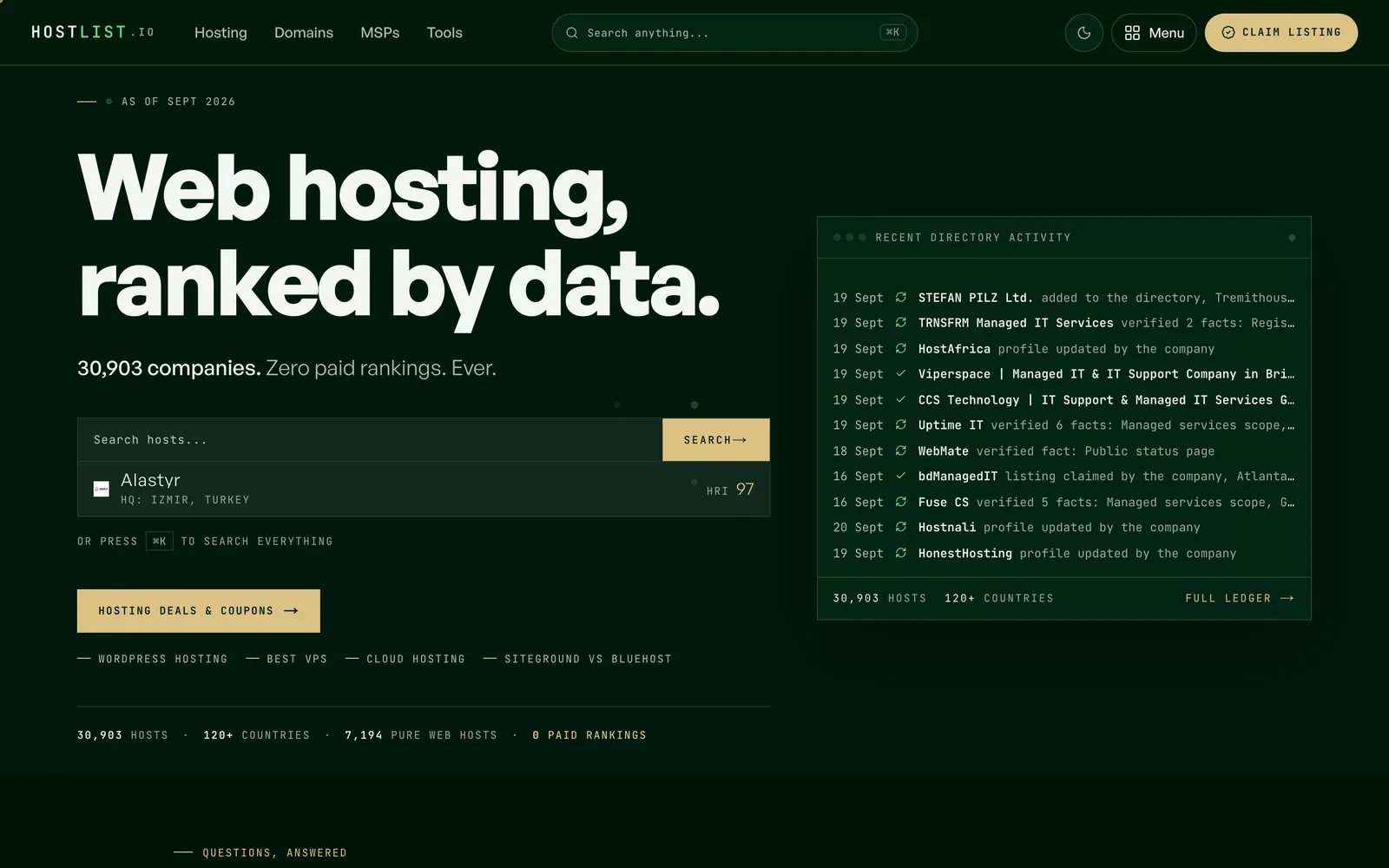
HostList.io says what it is before you read a word of copy. Host, plus list. The wordmark keeps the TLD inside the lockup, letterspaced in mono, with HOST set light and LIST picked out in green so the two halves of the compound stay readable as two ideas rather than one long word. Descriptive names are cheap to explain and expensive to protect. You get instant comprehension and a weaker trademark position, because registries are reluctant to hand anyone a monopoly on ordinary category words.
So the identity has to supply the distinctiveness the name cannot. Here that is the near-black green ground, the heavy grotesque display against mono data type, and a claim the business can be held to: thirty thousand nine hundred and three companies, zero paid rankings, ever. A category-word name plus a specific checkable promise is what stops a descriptive brand reading as generic.
The domain as the name: girl.dad
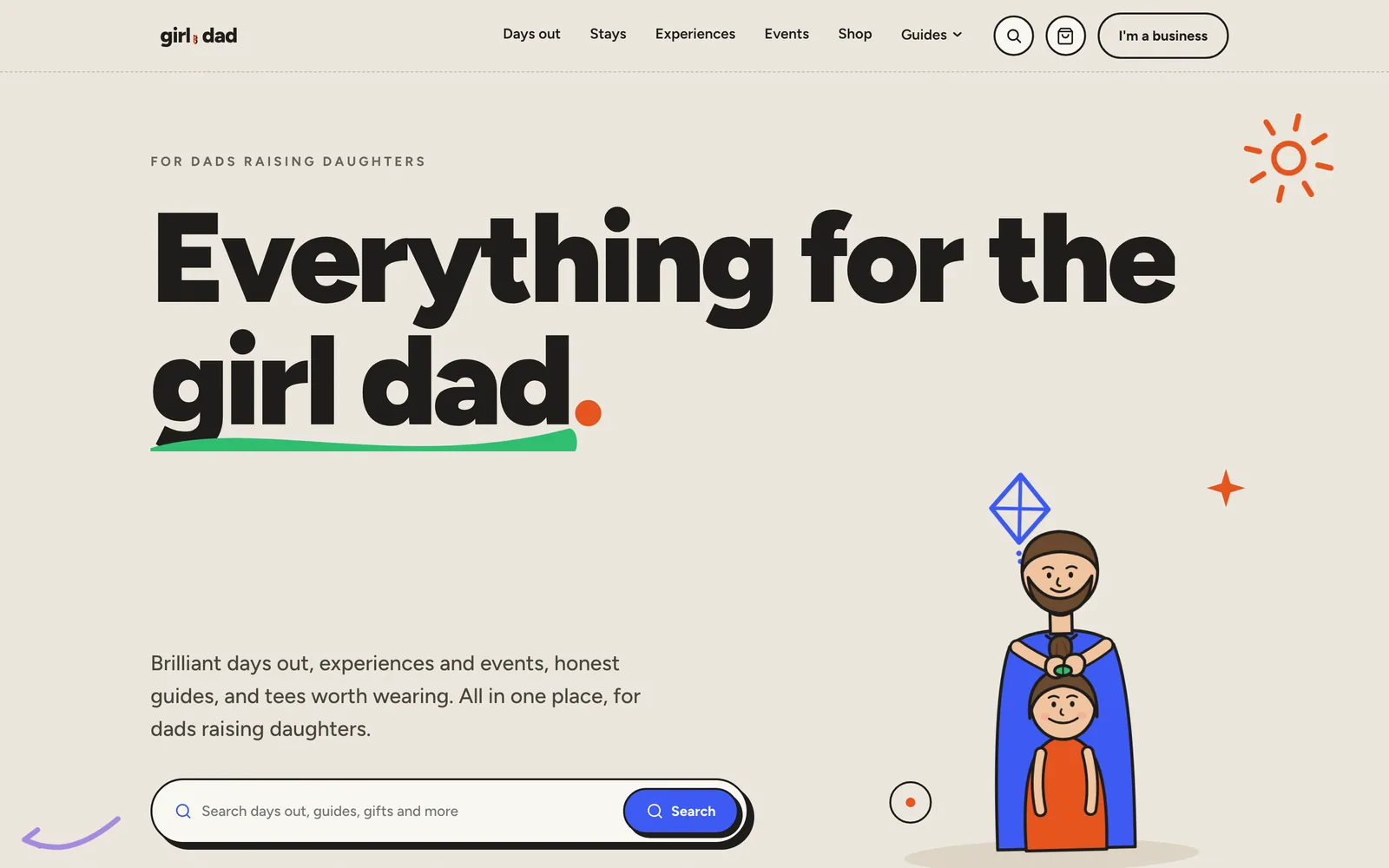
girl.dad does not have a domain. It is one. The TLD finishes the phrase, so the address bar and the wordmark are the same three syllables, and there is no gap between what someone hears and what they type. That is the most efficient naming pattern available right now, and the most exposed: you are renting the back half of your brand from a registry. If pricing or policy on .dad moves, you move with it in a way a .com owner does not.
It was worth taking here because the phrase already existed in the language. The name had no new word to teach anyone. The identity then leans into the warmth the phrase promises rather than fighting it: heavy geometric lowercase, an off-white ground instead of white, an outline illustration set that stays friendly without going childish, and a single orange glyph between the two words as the only place the logo does anything clever. That is about the right amount of clever.
Category plus claim: GemsVerified.com
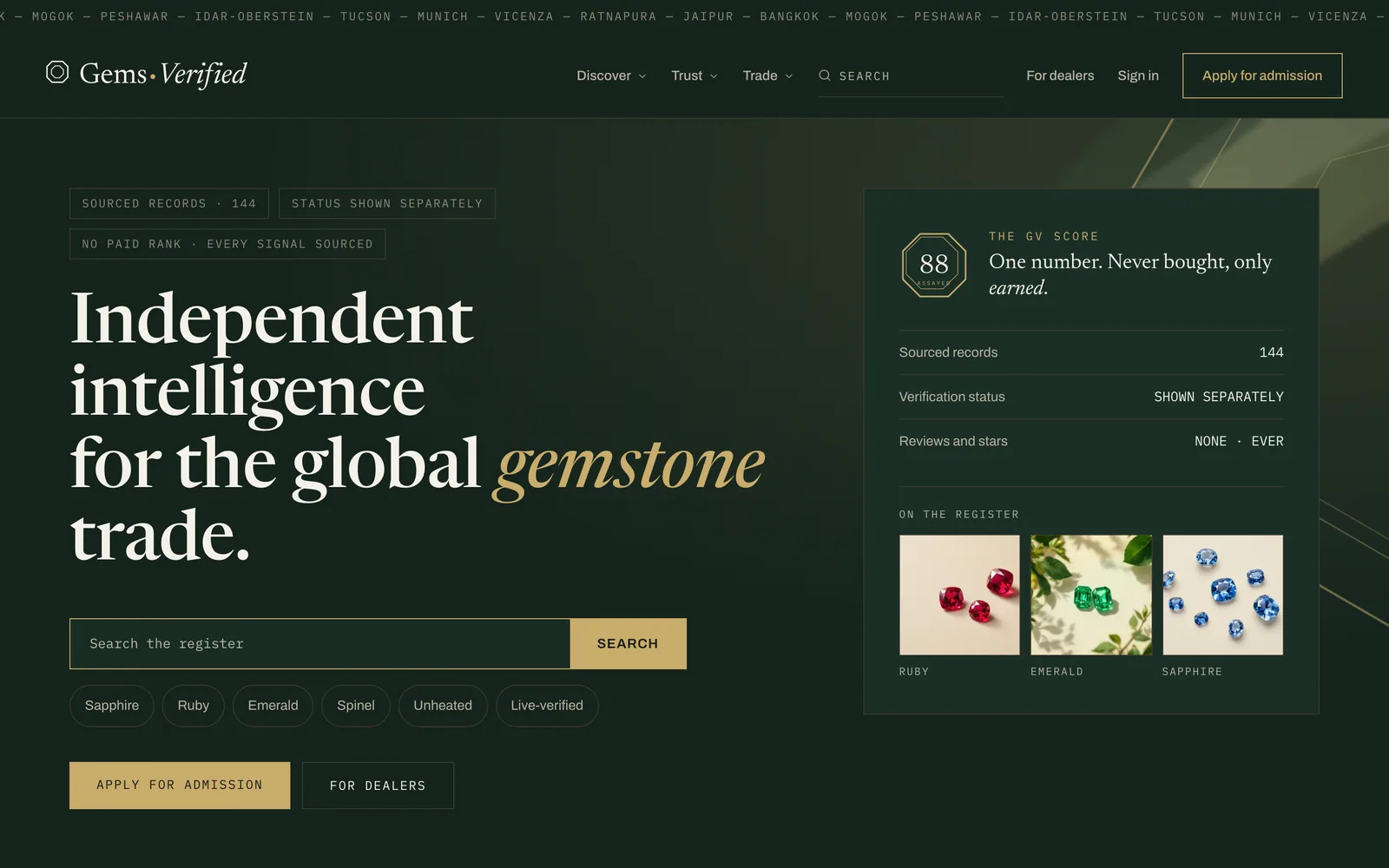
GemsVerified puts the promise inside the name. Category noun, then the thing the product does to it. The pattern buys you positioning for free and writes a cheque the business then has to honour, because a brand called Verified that ships anything unverified has a bigger problem than a naming problem.
Which is why the identity is built as evidence rather than decoration. The mark is an octagonal assayer stamp. The palette reads closer to an auction house than a marketplace, deep green and gold, serif display against mono labels. And the homepage leads with receipts instead of adjectives: one GV score, a hundred and forty-four sourced records, verification status shown separately, reviews and stars none, ever. When the name makes a claim, every surface has to carry proof of it. Harder identity brief. Much better long-term position.
Pick the pattern first, because it decides the brief
Descriptive names need the identity to supply distinctiveness. Domain-phrase names need it to supply warmth and a sense of permanence the registry does not give you. Claim names need it to supply evidence, on every surface, forever. Same three designers, same budget, three completely different jobs. That is the argument for buying naming and identity from the same conversation even when they arrive as two separate invoices.
グローバル商標検索を自分で行う方法
これは実践的なワークフローです。2時間、無料で、名前をコミットする前に実施します。順序が重要です。紛争を早期にキャッチすることで、下流の管轄区域の検索費用が削減されるからです。
アメリカ合衆国については USPTO Trademark Search システムから始める。完全な文言と近い変形を検索し、Nice クラス番号だけに頼るのではなく関連商品またはサービスをレビューする。予備的な自動スクリーンはショートリストに役立つが、USPTO は連邦記録を超えた広範なクリアランス検索を推奨する。
欧州連合の商標出願および登録については EUIPO TMview または eSearch plus に進む。次に Madrid System レコードおよび参加国または地域の収集について WIPO Global Brand Database を使用する。WIPO は、グローバルデータベースがすべてのオフィスに提出されたすべてのマークを含まないため、関連する国および地域の登録簿を直接検索することを推奨する。
商標 対 著作権 対 意匠権
これら3つは異なる対象を保護し、人々はしばしば混同します。時には出願手続きの途中で混同が生じ、実際の費用がかかります。
商標は名前・ロゴ・スローガン、その他の出所識別子を商取引で保護します。「この商品はこの企業のものだ」と示す何もかもです。登録は管轄地ごとで、米国商標ではドイツで保護されず、更新がなければ保護は失効し、通常10年ごとに更新します。
商標弁護士を雇うべき時期
候補名を2~3個に絞り込んだ後、出願または重大な上市支出にコミットする前に、資格を持つ商標専門家を雇ってください。自動化および自己指向の調査は、音韻の類似性、関連商品またはサービス、未登録権、および管轄区域固有の問題を見逃す可能性があります。
出願が複数の管轄区域にまたがる場合、またはマドリッド協定議定書を使用する場合は、専門的な支援が特に重要です。調査の深さ、政府手数料、クラス数、現地代理人要件、および異議申し立ては、対象を実質的に変える可能性があります。クリアランス、出願、応答、および更新責任をカバーする、管轄区域ごとの書面による見積もりを求めてください。
Move to EUIPO TMview or eSearch plus for European Union trade mark applications and registrations. Then use the WIPO Global Brand Database for Madrid System records and participating national or regional collections. WIPO recommends searching relevant national and regional registers directly because the global database does not contain every mark filed with every office.
UKIPO is separate from EU filings since Brexit, so check it independently. National offices for key markets follow — IP India, Japan Patent Office, KIPRIS for South Korea, CNIPA for China, IP Australia. Cover every market where you operate, sell or plan a meaningful launch.
Domain availability comes next — check .com, .co, .io, .ai, plus your country TLD. A name without at least one premium domain at reasonable cost is functionally untenable. Social handles on LinkedIn, X, Instagram, YouTube, GitHub, and TikTok matter for brand integrity; tools like Namechk run them in parallel. Finally, Google the candidate name plus your category to surface unregistered common-law marks. Many jurisdictions still recognise these and they can block your registration even though the prior user never filed.
ブランドアイデンティティプロジェクトにかかる期間
タイトなスタートアップブランドなら3週間。1人のデザイナー、素早い判断、ファウンダーが決裁。ロゴ・書体・カラー・基本ガイドライン。出力は実用的ですが最小限で、立ち上げには足りますが、マーケティング部隊をスケールするには足りません。
典型的な中小企業エンゲージメントの6〜10週間。フルロゴシステム、タイプシステム、カラーシステム、デジタルとプリントにわたるアプリケーション、ガイドラインドキュメント。ここは資金調達を受けたスタートアップと中小企業の大部分が位置する場所だ。
コーポレートアイデンティティプログラムの12〜20週間。リサーチ、ネーミング(必要な場合)、アイデンティティシステム、30以上のサーフェスにわたるアプリケーション、アニメーション、ブランド管理ポータル。3つのタイムラインすべてにおいて最大の変数はデザイン時間ではなく、意思決定のスピードだ。タイムラインを逃すプロジェクトのほぼすべてがそうなる理由は、スタジオが納品できないからではなく、クライアントが2つの方向性の間で決断できないからである。
Design rights protect the ornamental appearance of a product — the shape of a bottle, the unique layout of an interface, the silhouette of a piece of furniture. These are called design patents in the United States and design rights elsewhere. A logo is typically registered as a trademark; the artwork inside the logo is also automatically protected by copyright; the product the logo appears on may have its own design rights. They stack rather than substitute.
2026年のブランドアイデンティティの費用
フリーランスまたはフリーランスの仕事は1,500ドル〜8,000米ドル。ロゴ、タイプ、カラー、基本的なアプリケーション、1ページのガイドライン。アイデアを検証しているスタートアップまたはゼロから立ち上げ可能な状態に到達したいソロ創業者に適切だ。
スタジオエンゲージメントは15,000ドル〜45,000ドル。フルアイデンティティシステム、デジタルとプリントにわたるアプリケーション、完全なガイドラインドキュメント。資金調達を受けたスタートアップと、ブランドが12ヶ月以内に深刻な販売プレッシャーを担う中小企業に適切だ。
このガイドを書いている理由
私はIP弁護士ではなく、これは法的助言ではありません。クリアランス、出願、および特定の名前に関するアドバイスについては、資格を持つ商標専門家を使用してください。
Seahawk Mediaを2018年に共同設立し、それ以来12,000のウェブサイトを出荷してきました。ほとんどは米国・イギリス・ヨーロッパ・アジアのエージェンシー・スタジオ・インハウスチームのブランド業務を担当しています。本番環境でスケール運用がどう機能するかを観察してきました。実際に従われるガイドラインフォーマット、ファビコンと看板スケールで成立するロゴシステム、週5回のコンテンツ配信をするマーケティング部隊と接触後も生き残るカラーパレット。
私は個人的にBrandy HQを共同創設しました。Brandy HQは、創業者が6ヶ月のスタジオ契約なしでロゴ、パレット、ガイドラインを公開するのを支援するブランドアイデンティティワークスペースです。このプロダクトは、フリーランスFiverr業務と45,000ドルのスタジオ契約の間のギャップが、ほとんどのアーリーステージブランドが実際に必要とする場所だからこそ存在します。このガイドは実践的なアイデンティティおよび予備検索ワークフローをカバーしています。適格弁護士が法的クリアランスおよび出願を処理します。
WHAT BRAND IDENTITY COSTS IN 2026
Indie or freelance work runs one thousand five hundred to eight thousand US dollars. Logo, type, colour, basic applications, one-page guideline. Right for startups validating an idea or solo founders getting from zero to launchable.
Studio engagements run fifteen thousand to forty-five thousand. Full identity system, applications across digital and print, full guidelines document. Right for funded startups and small businesses where the brand will carry serious sales pressure within twelve months.
Corporate identity programmes run seventy-five thousand to three hundred thousand. Research, naming, identity, thirty-plus application surfaces, motion, brand-management portal. Right for funded scale-ups, enterprise rebrands, and acquisitions that need to consolidate brands.
Budget trademark work separately from design. Professional-search and filing fees vary materially by country, number of classes, application route and whether objections arise, so request a written jurisdiction-by-jurisdiction scope.
WHY I AM WRITING THIS GUIDE
I am not an IP attorney and this is not legal advice. Use a qualified trademark professional for clearance, filing and advice about a specific name.
I co-founded Seahawk Media in 2018 and have shipped twelve thousand websites since — most of them carrying the brand work of agencies, studios, and in-house teams across the United States, United Kingdom, Europe, and Asia. I have watched what works in production at scale: which guideline formats actually get followed, which logo systems hold up at favicon and billboard scale, and which colour palettes survive contact with a marketing team that is shipping content five times a week.
I personally co-founded Brandy HQ, a brand-identity workspace that helps founders ship logos, palettes, and guidelines without the six-month studio engagement. The product exists because the gap between freelance Fiverr work and a forty-five thousand dollar studio engagement is the place most early-stage brands actually need to be. This guide covers practical identity and preliminary-search workflow; qualified counsel handles legal clearance and filing.