Every week someone asks me the same question: which AI model is best for coding? It is the wrong question, and answering it honestly changed how I build. In 2026 the advantage is not picking one model. It is running several of them like a team, each doing the one job it is genuinely best at, with a human operator holding the whole thing together.
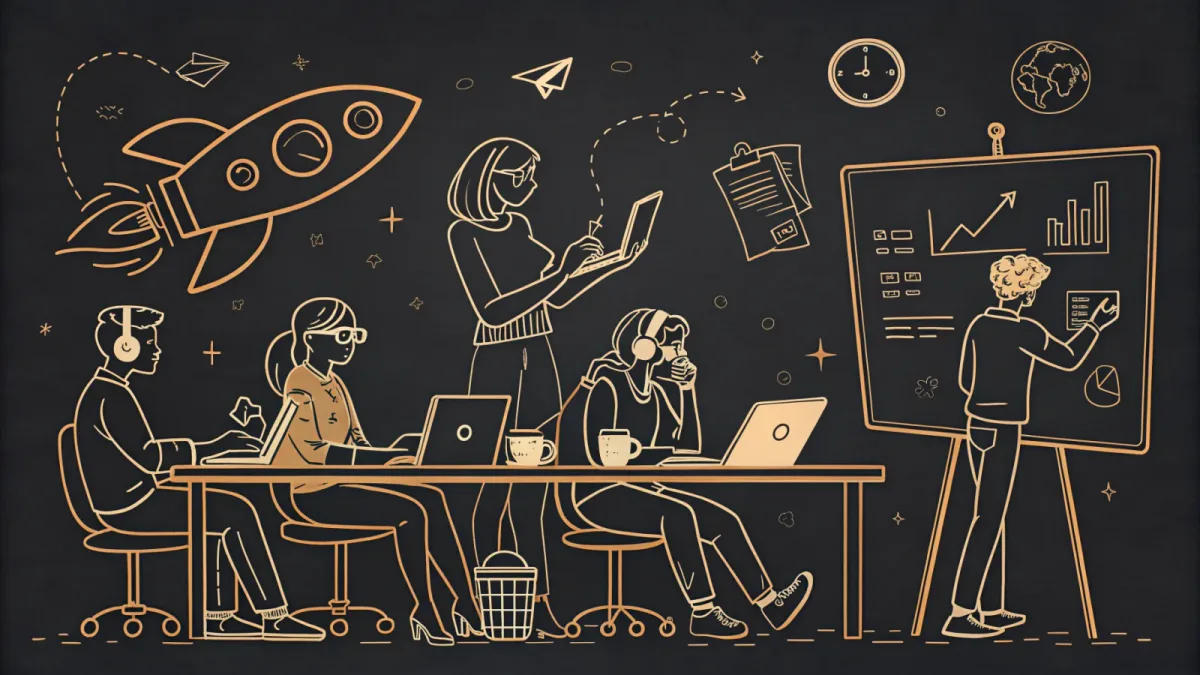
I am only half joking when I say I have business partners now and most of them are language models. One plans. One writes. One argues with everyone. One ships code faster than I can finish a sentence. One reads the fine print at 11pm and finds the thing the rest of us missed. Treating them as a single tool is like hiring one person to do sales, design and accounting. Treating them as a team is where the real gains are.
Key takeaway: Stop asking which AI model is best for coding. Give each job to the model that is best at it, plan before you build, review every change yourself, and you get the output of a small team from a desk of one.
What is vibe coding, really?
Vibe coding is the practice of describing what you want in plain language and letting an AI model build it, then steering by feel rather than writing most of the code yourself. It is a genuinely good way to start. You get momentum, a working screen in minutes, and a prototype you can react to. The trap is believing that vibe coding plus one model equals a finished product. It gets you a convincing demo. It does not, on its own, get you auth, error handling, edge cases, or code you would put your name on.
The fix is not to stop vibe coding. It is to grow up the process around it: bring in more than one model, give each the work it is suited to, and keep a person accountable for what ships. That is the difference between a weekend prototype and something a business can run on. I wrote up the production version of this on my agentic engineering page; this post is about the day to day feel of it.
Meet the team: the six AI models I actually build with
Here is the roster, and the one job each has earned. The personalities are a bit of fun; the roles are real, and they map to how I actually delegate.
- The deep thinker. Claude Opus is the one I hand a vague brief to when the decision matters. It decomposes the problem, lays out assumptions and trade-offs, and sequences the work before a line is written. Most bad AI code is really a missing plan, so this is the most valuable seat on the team.
- The storyteller. Fable turns a boring feature list into something a person actually wants to read. When a page needs a voice, a product needs a name, or a dry changelog needs to sound human, this is the model I reach for.
- The chaos agent. Grok is 40 percent genius and 60 percent "hear me out", and that is a compliment. It is the one I use to pressure test a plan: have you considered this, what breaks if, why not the opposite approach. Badly underrated as a devil's advocate.
- The speed demon. Composer, Cursor's own model, ships code faster than the rest of us can finish a sentence. For well scoped, mechanical work, wiring a component, fixing a failing test, a routine refactor, it is the default, and it is priced to run all day rather than be rationed.
- The details person. Kimi catches the thing everyone else missed at 11pm. It is my QA and design eye: I point it at a screen and it tells me what is off. More on that below, because this week it earned its seat.
- The optimist. GPT-5.6 Sol treats every mess as an outline waiting to happen. When I have a pile of half-formed points, it is the fastest at turning them into a clean, answer-first structure that both readers and AI search engines reward.
How the hand-offs actually work
The magic is not any single model. It is the hand-offs. A normal build looks like this: I brief the deep thinker and we agree a plan. The speed model executes that plan in small, reviewed steps. When a step gets stuck or feels wrong, I ask the chaos agent for two other ways to do it. The storyteller writes anything a human will read. The details model does a pass at the end to catch what slipped through. And I own the merge, because a person has to be accountable for what goes live.
I run most of this inside Claude Code, the setup that keeps the whole thing honest: project rules, review gates, and a place for each model to work without stepping on the others. The important part is not the tool. It is that every change is reviewed by me before it ships, no matter which model wrote it. That single rule is what separates a team of models from a pile of unreviewed output.
A real example: the model that caught what the others missed
This week is a good illustration. I had spent days rebuilding a section of my own site with the usual crew, and it looked finished. Then I gave the details model a simple job: screenshot the key pages on desktop and mobile, and audit the interface like a senior designer would.
It came back with something four other models had happily shipped past. A whole tier of my muted text, the captions and meta lines and small print that carry real information, was failing accessibility contrast against the dark background. Not by a hair; the dimmest tier was well under the readable threshold, and it had been there the whole time. The fix was a single design token change, and the pages went from failing to passing in one pass.
That is the case for a team in one story. Every model has a different eye. The planner does not see what the design critic sees; the speed model does not slow down to measure contrast. Put several of them on the same work and you catch far more than any one of them, or any one person, would alone.
Where vibe coding still breaks
None of this makes vibe coding safe by default. It breaks in the same few places every time: code that ships without a human reading it, building with no plan and hoping the model improvises one, tunnel vision from using a single model for every job, and the unglamorous parts, auth, security, edge cases, that a demo never exercises. A convincing prototype hides all of these.
The team approach is the fix, not because more models means less thinking, but because it forces the thinking into the open: a plan you agreed to, alternatives you weighed, a QA pass you ran, and a person who signed off. If you want the honest, model by model breakdown of who is best at what, I keep a running one in my ten day test of eight AI coding models.
Frequently asked questions
What is vibe coding?
Vibe coding is describing what you want in natural language and letting an AI model build it, steering by feel rather than writing most of the code yourself. It is fast for prototypes and momentum. Turning a vibe-coded prototype into a production product takes a plan, review, and usually more than one model.
Can you build a real product by vibe coding?
You can build a real prototype quickly, and a real product if you add the parts vibe coding skips: a plan up front, auth and error handling, edge cases, and a human reviewing every change before it ships. Vibe coding is a great start, not the whole job.
Which AI model is best for coding?
There is no single best model. Claude Opus and GPT-5.6 lead on planning, Cursor's Composer wins on speed and value, Claude leads on writing, and Grok is a strong second opinion. The right answer is to match the model to the task rather than pick one winner.
Do you need more than one AI model?
For a prototype, no. For serious work, using two or three pays off quickly: one to plan, one to build fast, and one to review. Each model has different strengths and blind spots, so a small team of them catches more and produces better work than any single model.
Is AI-written code safe for production?
It is safe when it is treated like code from any new hire: a plan first, then a human review of every change, plus tests and a security pass before it ships. The risk is not the model writing the code; it is shipping that code without anyone reading it.
What is the difference between vibe coding and agentic engineering?
Vibe coding is steering an AI by feel to build something quickly. Agentic engineering is the disciplined version: agent workflows do the volume while a senior engineer owns the architecture and reviews every change. One is how you start; the other is how you ship to production.
So no, I do not vibe code with one AI and hope. I run a small team of them, each in the seat it earned, and I read every diff before it goes live. It is the most productive setup I have worked in, and honestly the most fun. What a time to be building.